Plate VII · Root
Beetroot
Beta vulgaris
A deeply pigmented root vegetable that naturally contains dietary nitrates and betalain pigments.
- Type
- Root
- Family
- Amaranthaceae
- Origin
- Cultivated worldwide; Mediterranean origins
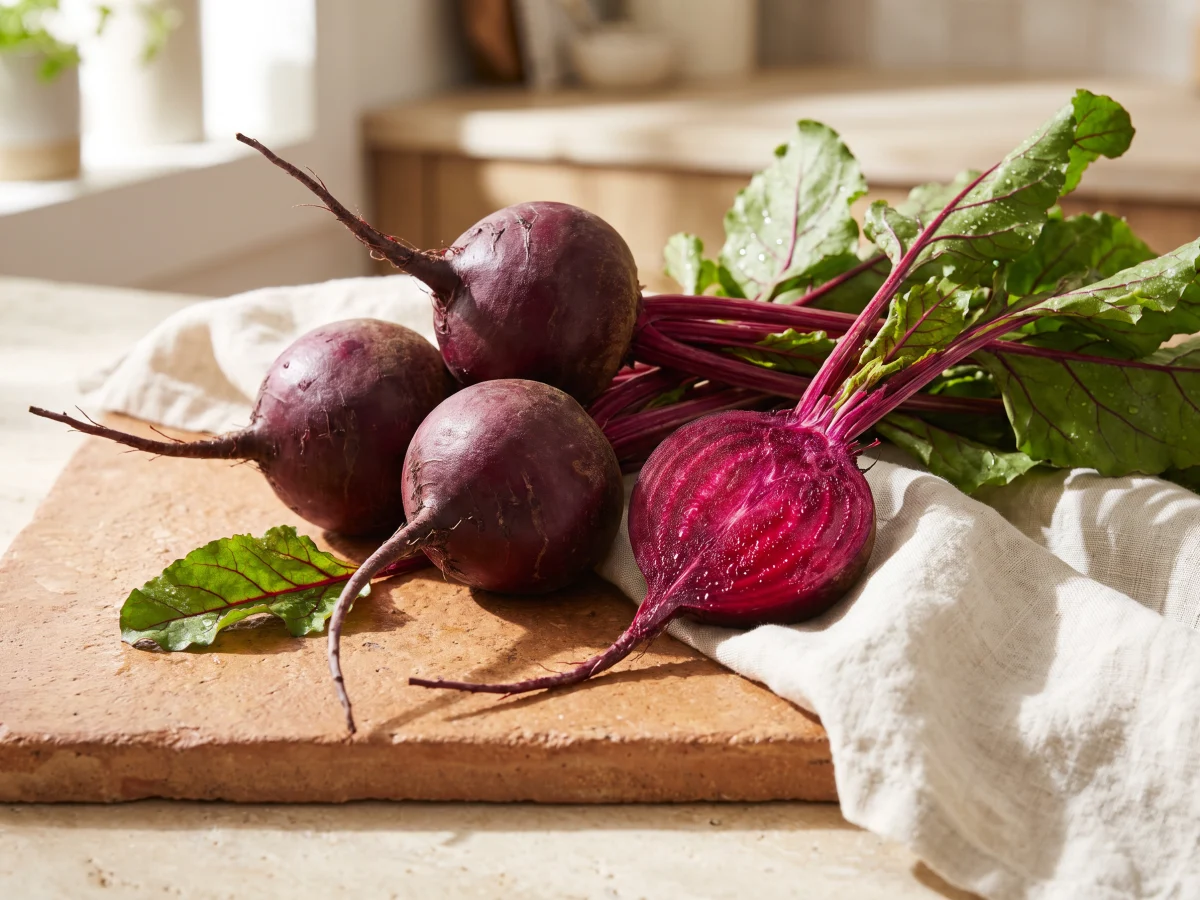
Beetroot is the taproot of Beta vulgaris, cultivated since antiquity from wild sea beet along Mediterranean coasts. Its crimson colour comes from betalains, a class of pigments found in relatively few food plants.
How beetroot is prepared
It can be eaten raw, roasted, juiced or dried into a vivid magenta powder. Powders and concentrated juices are popular because they are convenient, and their nitrate content depends on how the beets were grown and processed. Our product page will list the format and nutrition information from verified documentation.
Tradition, research, and what is established
We keep these three things separate, because they are not the same.
Traditional use
It has been eaten as food for centuries, and the plant was grown for its leaves even longer. It has also long been used as a natural colourant.
Preliminary research
Beetroot is a dietary source of nitrate, and its role in nutrition and exercise physiology is an active field of research.
Established
Beetroot naturally contains dietary nitrate and betalain pigments. It can temporarily colour urine and stools red (beeturia), which is generally harmless.
Reading a supplement label
On a supplement label, look for three things: the scientific name (Beta vulgaris), the part used (typically the root), and the amount per serving listed in the Supplement Facts panel. Those details, taken from the supplier’s documentation, tell you more about a product than any marketing claim.
Beetroot in the ASPHODEL collection
In the ASPHODEL collection, you will find this ingredient in ASPHODEL Beetroot. Each product page lists its ingredients and label details from verified supplier documentation, and the Botanical Journal explores the history and research behind the plants and fungi we work with.
Further reading on beetroot
Botanical reference: Beta vulgaris on Wikipedia
This page is educational and describes the history and characteristics of a botanical. It is not medical advice and does not describe the effects of any ASPHODEL product.
Find it in