Plate III · Flower bud
Clove
Syzygium aromaticum
The dried flower bud of an evergreen tree from the Maluku Islands, and one of the most valuable spices in history.
- Type
- Flower bud
- Family
- Myrtaceae
- Origin
- Maluku Islands, Indonesia
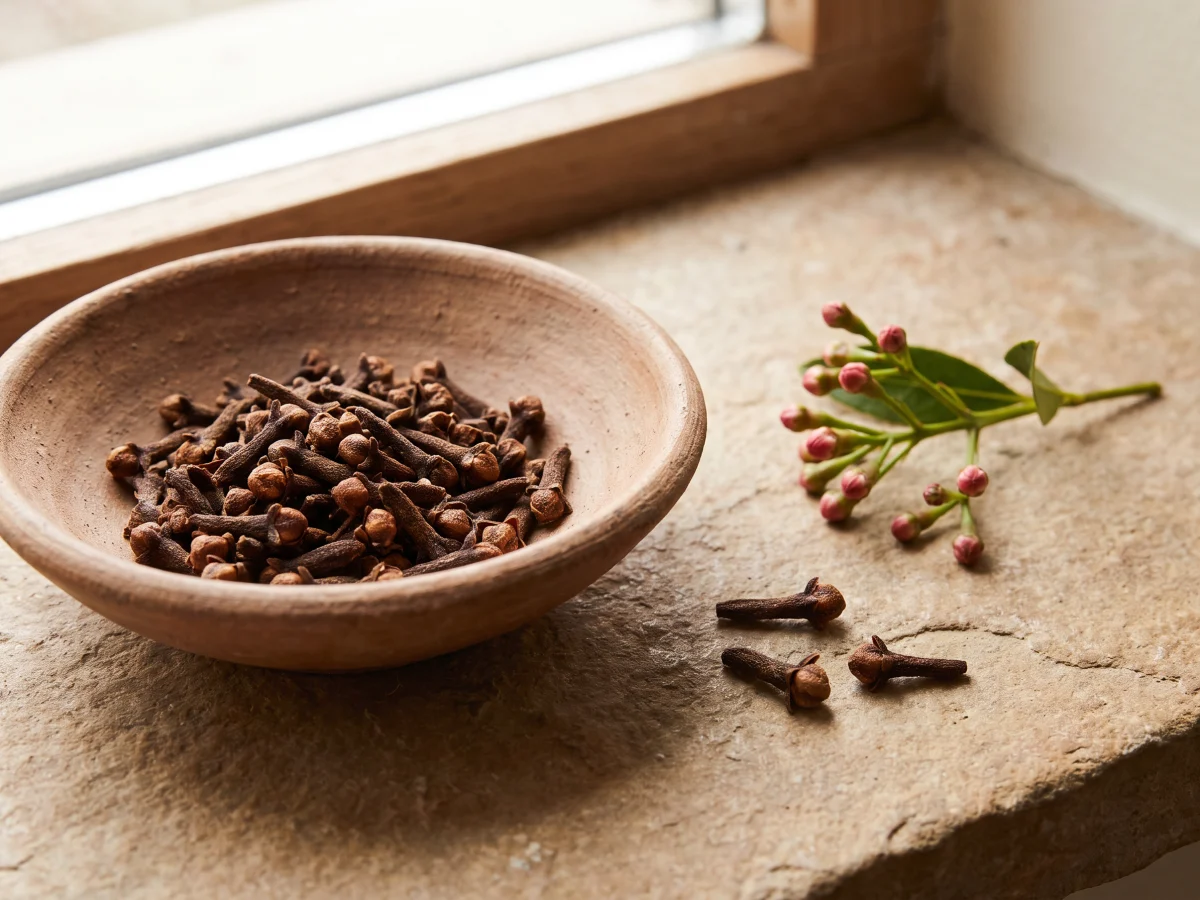
A clove is the unopened flower bud of an evergreen tree native to the Maluku Islands of Indonesia, the original ‘Spice Islands’. Picked before they bloom and dried until they turn rich brown, cloves were among the most fiercely traded commodities of the spice era.
How clove is prepared
Cloves are harvested by hand while the buds are still closed and pink, then dried in the sun until they turn their familiar dark brown. Whole cloves keep their aroma for a long time, and ground clove and clove extracts are used in cooking, perfumery and botanical products. In ASPHODEL Botanical Complex, clove joins wormwood and black walnut hull.
Tradition, research, and what is established
We keep these three things separate, because they are not the same.
Traditional use
Clove has a long history in cooking, perfumery, and traditional practice across Asia, the Middle East, and Europe. It is especially well known in traditional dental care.
Preliminary research
Clove’s warm aroma comes mainly from eugenol, a compound studied extensively in laboratory settings.
Established
Eugenol is the principal aromatic compound in clove and clove oil, and is used in dentistry and fragrance.
Reading a supplement label
On a supplement label, look for three things: the scientific name (Syzygium aromaticum), the part used (typically the dried flower bud), and the amount per serving listed in the Supplement Facts panel. Those details, taken from the supplier’s documentation, tell you more about a product than any marketing claim.
Clove in the ASPHODEL collection
In the ASPHODEL collection, you will find this ingredient in ASPHODEL Botanical Complex. Each product page lists its ingredients and label details from verified supplier documentation, and the Botanical Journal explores the history and research behind the plants and fungi we work with.
Botanical reference: Syzygium aromaticum on Wikipedia
This page is educational and describes the history and characteristics of a botanical. It is not medical advice and does not describe the effects of any ASPHODEL product.
Find it in
Products with Clove
-
Traditional Botanicals
Botanical Complex
18-in-1 blend: wormwood, black walnut hull & clove
Original price was: $39.99.$29.90Current price is: $29.90. / Month Add to cart