Plate XII · Leaf & pod
Senna
Senna alexandrina
A shrub whose leaves and pods have been used for centuries as a natural laxative, and still are today.
- Type
- Leaf & pod
- Family
- Fabaceae
- Origin
- North-east Africa and the Arabian Peninsula
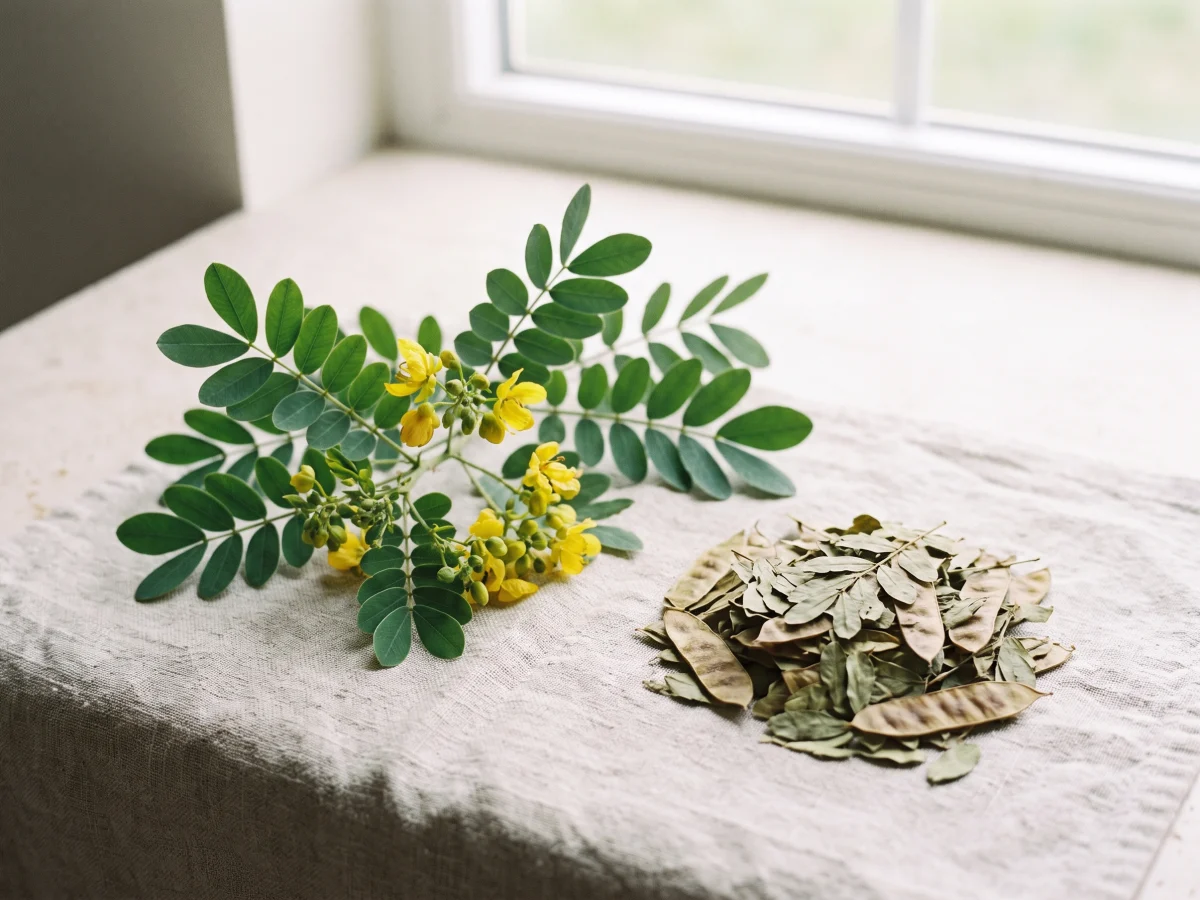
Senna is a small flowering shrub with pale green paired leaflets, yellow flowers and flat pods. It grows wild in Egypt, Sudan and the Arabian Peninsula, and it is cultivated widely in India. Its traditional name, Alexandrian senna, reflects the old trade route through the port of Alexandria.
How senna is prepared
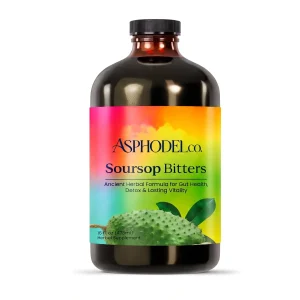
The dried leaves and pods are used in teas, powders and liquid extracts. In ASPHODEL Soursop Bitters, senna is one of five botanicals in a liquid formula led by soursop.
Tradition, research, and what is established
We keep these three things separate, because they are not the same.
Traditional use
Arab physicians described senna more than a thousand years ago, and it has been part of European, Middle Eastern and Indian herbal practice ever since, most often to encourage bowel movements.
Preliminary research
Senna's best-studied compounds are sennosides, which act on the large intestine. Its laxative action is well documented.
Established
Sennosides are an approved active ingredient in nonprescription laxatives in the United States. Senna is a stimulant laxative: it can cause cramping and loose stools, and long-term use can upset fluid and electrolyte balance. Do not use it for more than a week unless a healthcare professional advises it, and do not use it if you have abdominal pain, nausea or vomiting.
Reading a supplement label
On a supplement label, look for three things: the scientific name (Senna alexandrina), the part used (typically the leaf or pod), and the amount per serving listed in the Supplement Facts panel. Those details, taken from the supplier's documentation, tell you more about a product than any marketing claim.
Senna in the ASPHODEL collection
In the ASPHODEL collection, you will find this ingredient in ASPHODEL Soursop Bitters. Each product page lists its ingredients and label details from verified supplier documentation, and the Botanical Journal explores the history and research behind the plants we work with.
Further reading on senna
Botanical reference: Senna alexandrina on Wikipedia
This page is educational and describes the history and characteristics of a botanical. It is not medical advice and does not describe the effects of any ASPHODEL product.
Find it in
Products with Senna
-
Traditional Botanicals
Soursop Bitters
Liquid herbal bitters: soursop, senna, sea moss, turmeric & ginger
$39.99 / Month Add to cart