Plate VI · Mushroom
Cordyceps
Cordyceps spp. (Species confirmed per supplier)
A slender, club-shaped fungus with a storied history on the Tibetan Plateau, now mostly cultivated for modern use.
- Type
- Mushroom
- Family
- Cordycipitaceae / Ophiocordycipitaceae
- Origin
- Himalayan plateau; widely cultivated
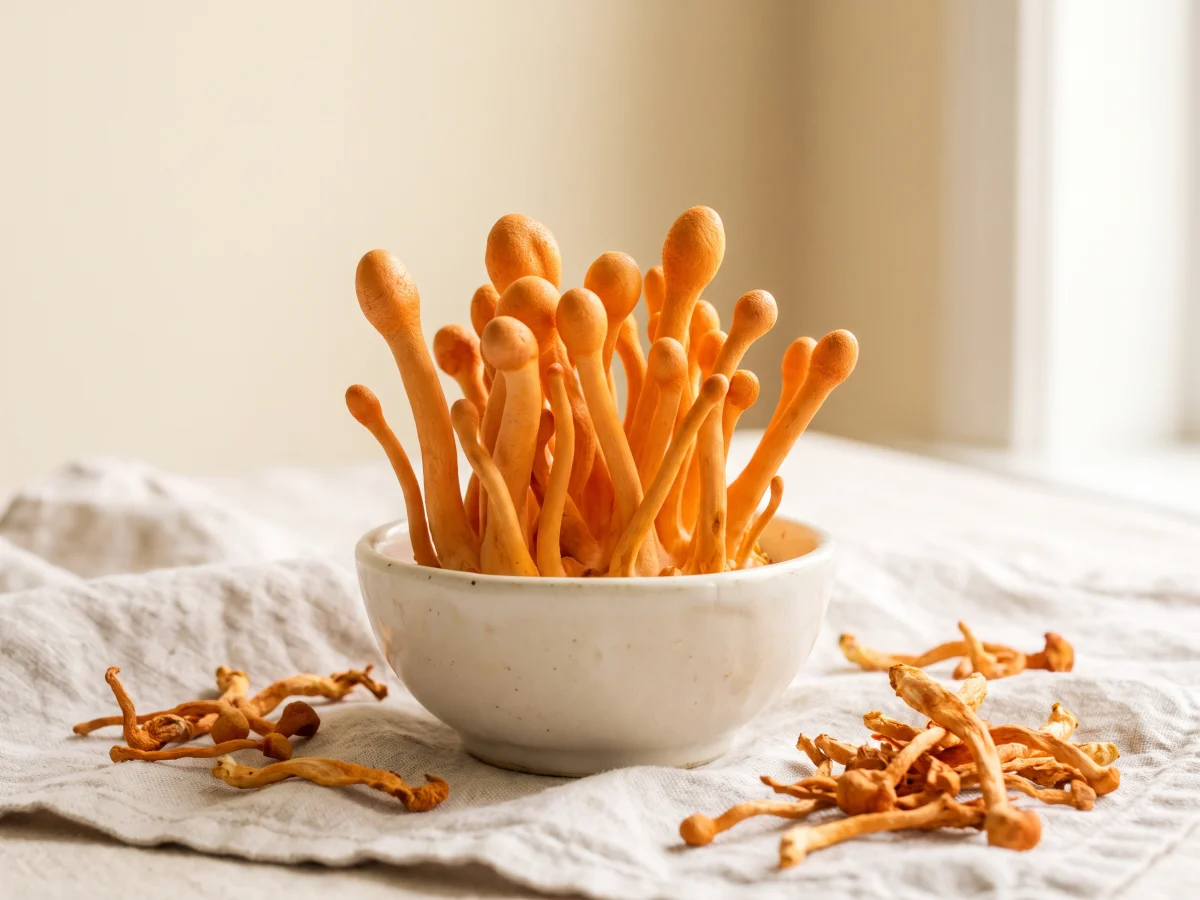
The name describes a group of fungi rather than a single species. The famous wild form, Ophiocordyceps sinensis, grows at high altitude on the Tibetan Plateau and is scarce and costly. Most modern supplements use cultivated species, most commonly C. militaris, which forms bright orange fruiting bodies.
How cordyceps is prepared
Because wild Ophiocordyceps sinensis is rare, nearly all products today come from cultivation, most often C. militaris grown on grain or in liquid culture. Cultivated fruiting bodies are bright orange and are dried, powdered or extracted. Our product page will name the species and source.
Tradition, research, and what is established
We keep these three things separate, because they are not the same.
Traditional use
The wild fungus holds a celebrated place in traditional Tibetan and Chinese practice, where it was historically a luxury.
Preliminary research
C. militaris contains cordycepin, a compound of active research interest. Much of the research is preliminary, and results differ by species and preparation.
Established
Species matters: O. sinensis and C. militaris are different organisms, so labels should always name the species used.
Reading a supplement label
On a supplement label, look for three things: the scientific name (Cordyceps spp.), the part used (typically the cultivated fruiting body or mycelium), and the amount per serving listed in the Supplement Facts panel. Those details, taken from the supplier’s documentation, tell you more about a product than any marketing claim.
Cordyceps in the ASPHODEL collection
In the ASPHODEL collection, you will find this ingredient in ASPHODEL Cordyceps. Each product page lists its ingredients and label details from verified supplier documentation, and the Botanical Journal explores the history and research behind the plants and fungi we work with.
Further reading on cordyceps
Botanical reference: Cordyceps spp. on Wikipedia
This page is educational and describes the history and characteristics of a botanical. It is not medical advice and does not describe the effects of any ASPHODEL product.
Find it in