Mushrooms
Reishi vs. Cordyceps: What Makes Them Different?
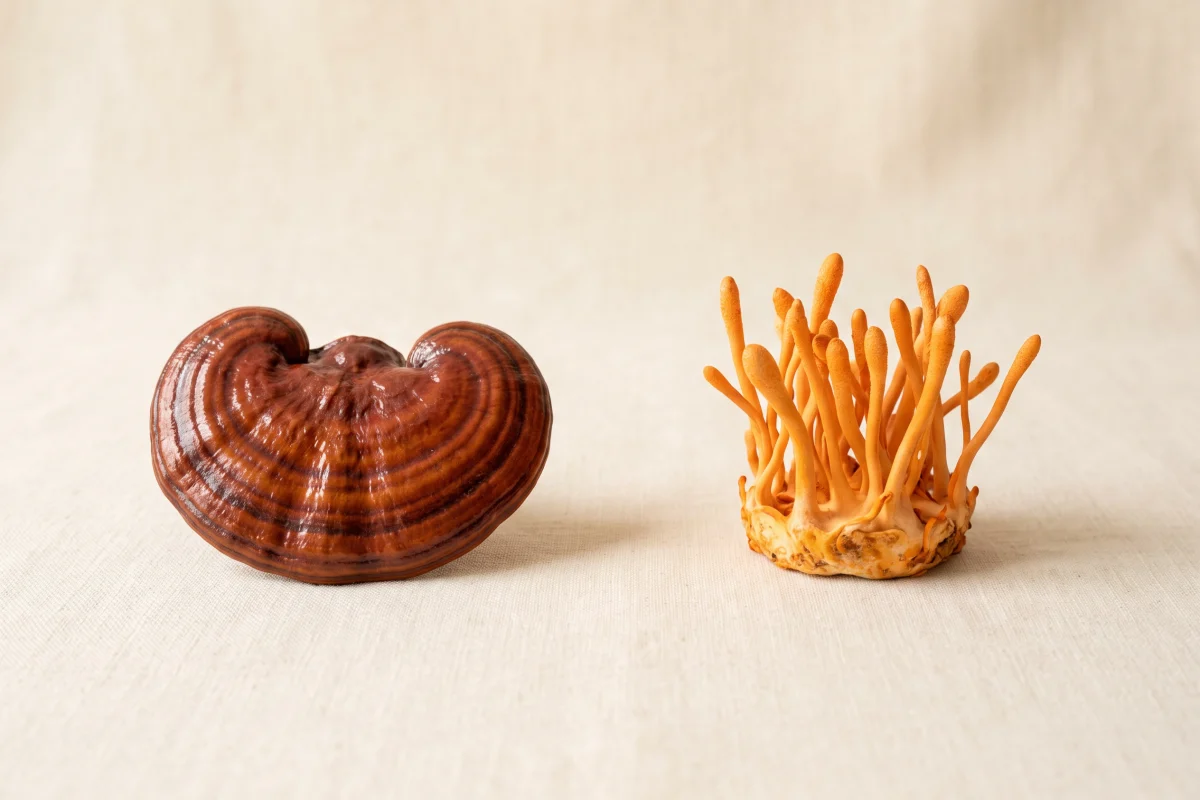
Reishi vs. cordyceps is a common comparison, but the two are very different organisms with very different histories.
Reishi: the lacquered mushroom
Reishi (Ganoderma) grows as a tough, shelf-like mushroom with a glossy, varnished-looking cap. Known as lingzhi in China, it appears in traditional texts across roughly two thousand years. It is woody and bitter, so it has always been prepared as teas and extracts rather than eaten.
Cordyceps: a mountain legend
‘Cordyceps’ covers a group of fungi. The legendary wild form, Ophiocordyceps sinensis, grows at high altitude on the Tibetan Plateau and is rare and expensive. Most modern products use cultivated Cordyceps militaris, which forms slender orange fruiting bodies.
Different compounds of interest
Researchers studying reishi focus on triterpenes and polysaccharides such as beta-glucans. In Cordyceps militaris, a compound called cordycepin draws particular interest. In both cases much of the research is preliminary.
Why the label matters
Because ‘reishi’ and ‘cordyceps’ can each refer to more than one species, a trustworthy product names the species it uses. We will always state it.
How they are prepared
Reishi is almost always prepared by long simmering or by hot-water extraction, because its tough tissue and bitter triterpenes make it unsuitable as food. Cultivated Cordyceps militaris, by contrast, is softer and is commonly dried and powdered or extracted. The preparation affects which compounds end up in the final product.
Reishi and cordyceps in a daily routine
People often encounter reishi and cordyceps as teas, powders or capsules. Whichever form you choose, the same questions apply: which species is it, which part of the mushroom is used, how was it extracted, and is the information backed by the supplier’s documentation?
In short, reishi and cordyceps share a reputation but little else. Reishi is a woody shelf fungus valued for long-simmered teas; cordyceps is a slender, club-shaped fungus that is now mostly cultivated. Knowing the difference makes it much easier to read a label and understand what you are actually buying.
Explore the related ASPHODEL products: ASPHODEL Reishi, ASPHODEL Cordyceps. You can also browse every ingredient in our library. For the botanical details, see the full ingredient profile.
Further reading: Cordyceps (Wikipedia)
This article is for general education and is not medical advice. It does not describe the effects of any ASPHODEL product.
From the collection
Products mentioned
Keep reading
More from the Journal
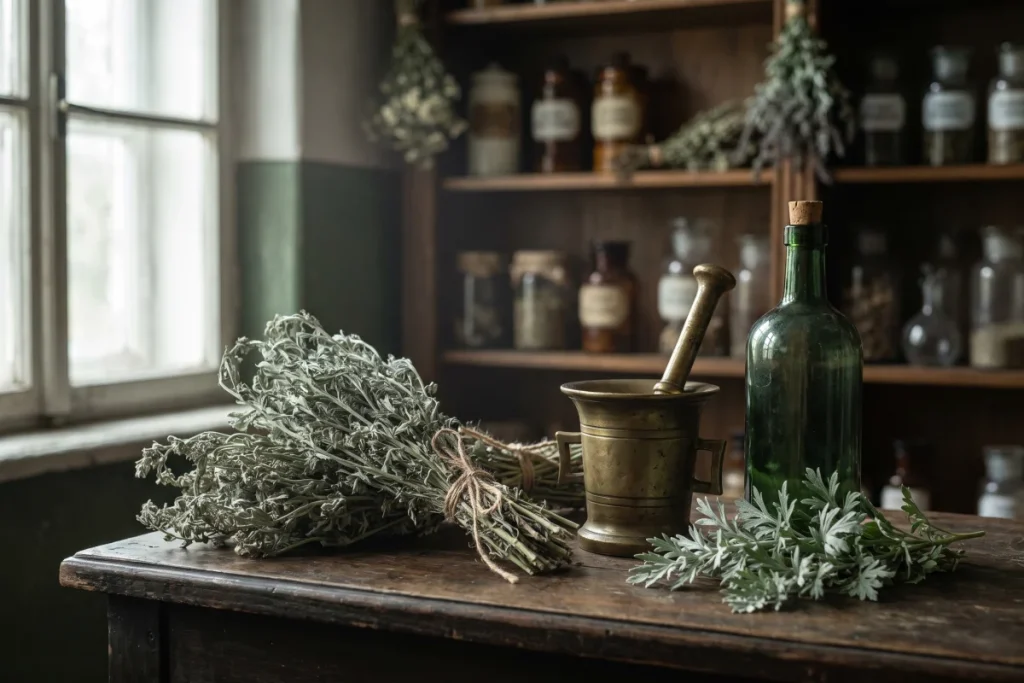
What Is Wormwood? Botanical History and Traditional Uses
From European apothecaries to the history of absinthe, a clear-eyed look at one of the most bitter plants in botanical history.
Read Article
Black Walnut Hull: History and Botanical Characteristics
The green husk of a native North American hardwood, its dye-making past, and the compound that shapes the ground beneath it.
Read Article
Lion’s Mane: Understanding the Mushroom
Spines instead of gills, fruiting body versus mycelium, and what current research does and does not tell us.
Read Article