Plate V · Mushroom
Reishi
Ganoderma spp. (Species confirmed per supplier)
The glossy, lacquered 'lingzhi' mushroom, celebrated in traditional Chinese texts for roughly two thousand years.
- Type
- Mushroom
- Family
- Ganodermataceae
- Origin
- Temperate & subtropical forests
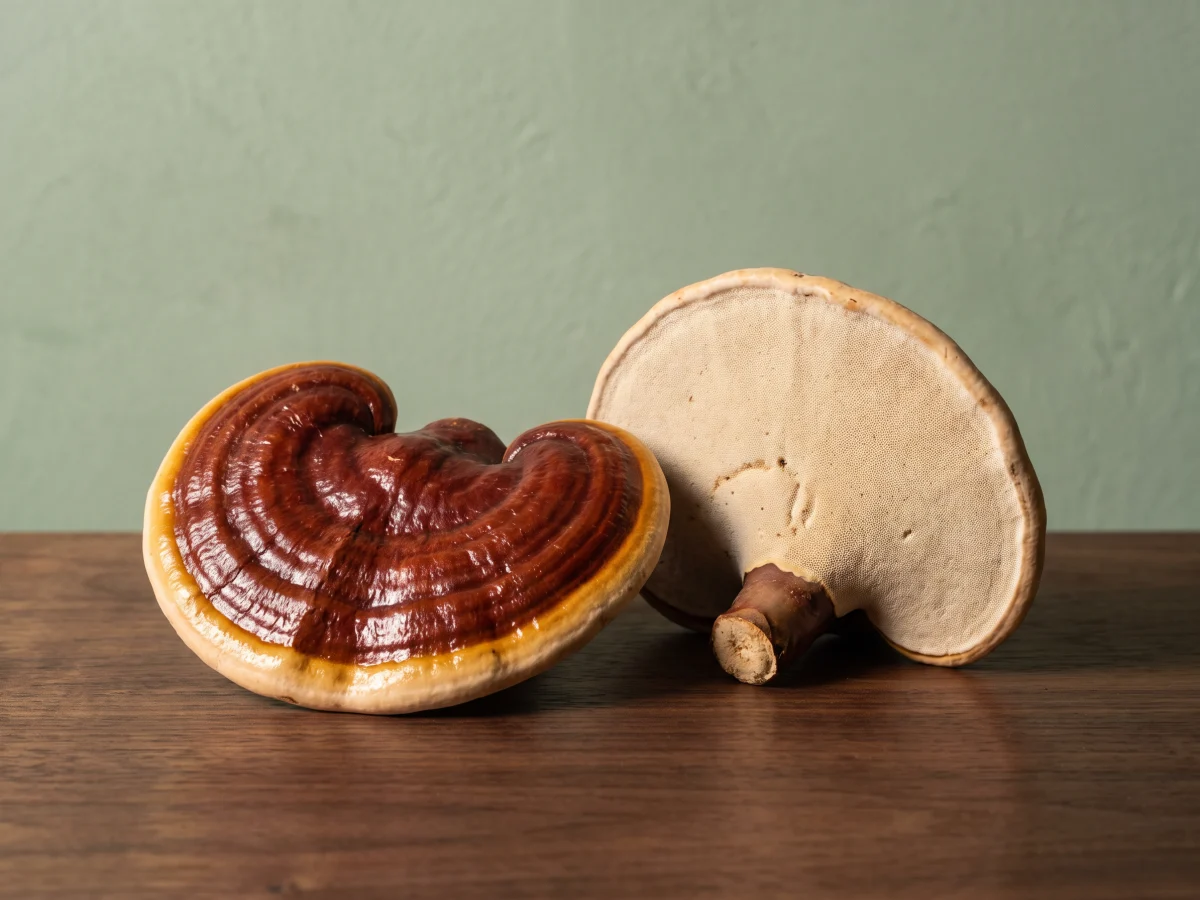
The reishi mushroom is a woody, shelf-like fungus with a glossy reddish-brown cap that looks varnished. In China it is called lingzhi, and it appears in art and traditional texts spanning roughly two millennia. Because it is tough and bitter, it is prepared as teas and extracts rather than eaten.
How reishi is prepared
Reishi is too tough and bitter to eat, so it has traditionally been sliced and simmered for hours as a tea, or processed into extracts. Modern products may use hot-water or dual extraction and may standardise for polysaccharides or triterpenes. ASPHODEL Reishi will state its species, source and preparation once confirmed with our supplier.
Tradition, research, and what is established
We keep these three things separate, because they are not the same.
Traditional use
In traditional Chinese practice reishi was treated as a revered, tonic mushroom, typically simmered as a decoction.
Preliminary research
Reishi contains triterpenes, which account for its bitterness, and polysaccharides including beta-glucans. These compounds are the subject of ongoing laboratory and clinical research with mixed and preliminary results.
Established
Commercial ‘reishi’ may refer to several Ganoderma species, so the exact species should always be stated by the supplier.
Reading a supplement label
On a supplement label, look for three things: the scientific name (Ganoderma spp.), the part used (typically the fruiting body or mycelium), and the amount per serving listed in the Supplement Facts panel. Those details, taken from the supplier’s documentation, tell you more about a product than any marketing claim.
Reishi in the ASPHODEL collection
In the ASPHODEL collection, you will find this ingredient in ASPHODEL Reishi. Each product page lists its ingredients and label details from verified supplier documentation, and the Botanical Journal explores the history and research behind the plants and fungi we work with.
Further reading on reishi
Botanical reference: Ganoderma spp. on Wikipedia
This page is educational and describes the history and characteristics of a botanical. It is not medical advice and does not describe the effects of any ASPHODEL product.
Find it in