Plate IV · Mushroom
Lion’s Mane
Hericium erinaceus
A striking tooth fungus that grows as a cascade of soft white spines, enjoyed in East Asian cooking and widely studied today.
- Type
- Mushroom
- Family
- Hericiaceae
- Origin
- Hardwood forests, Northern Hemisphere
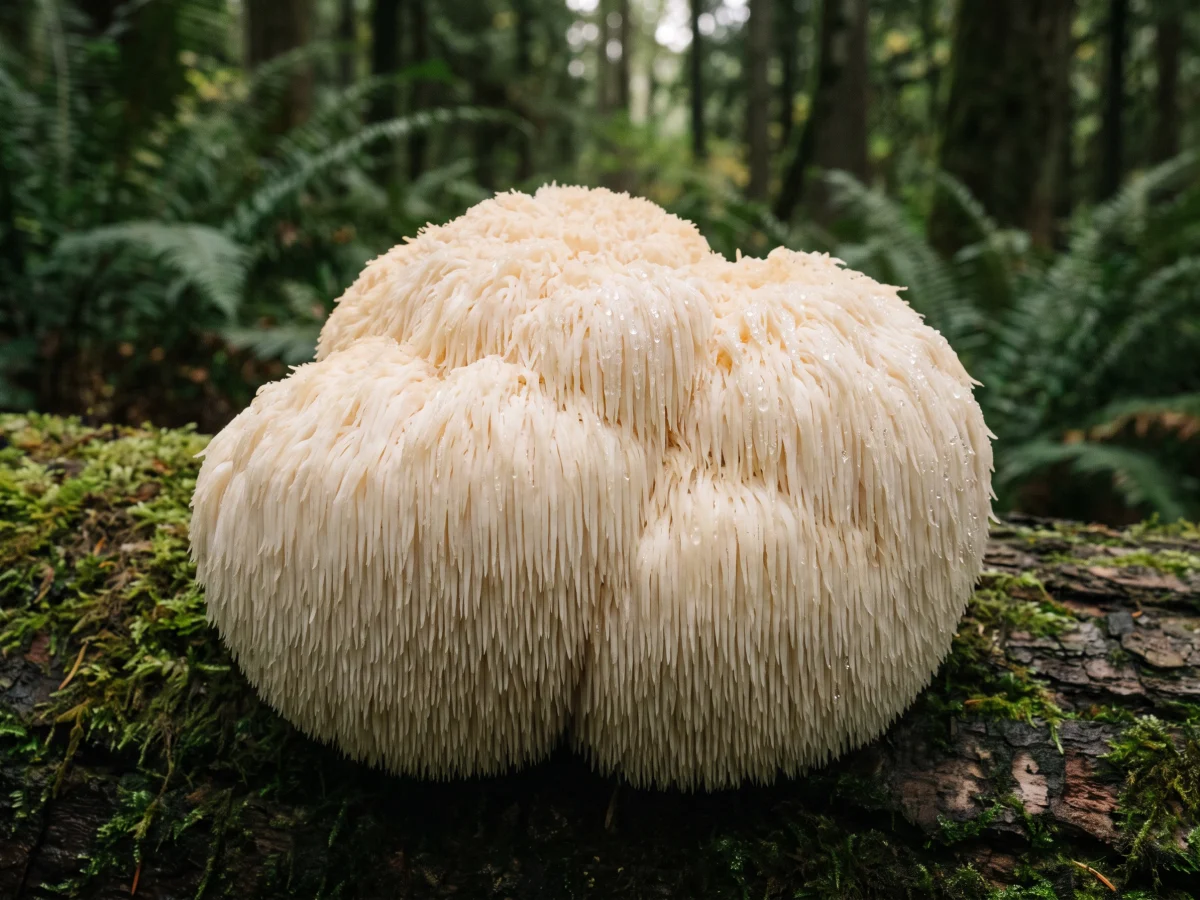
The lion’s mane mushroom grows on hardwood trees as a single white mass of cascading spines rather than a cap and gills. It is also known as bearded tooth or, in Japan, yamabushitake, and its delicate texture has made it a prized culinary mushroom.
How Lion’s Mane is prepared
It can be eaten fresh, when it has a delicate texture often compared to seafood, or dried and prepared as a powder or extract. Supplements may use the fruiting body, the mycelium, or both, and extraction method changes which compounds are present. Our product page will list the source material and preparation from verified supplier documentation.
Tradition, research, and what is established
We keep these three things separate, because they are not the same.
Traditional use
It has been enjoyed as a culinary mushroom in East Asia and appears in traditional Chinese and Japanese practice.
Preliminary research
The mushroom contains two families of compounds that interest researchers: hericenones (in the fruiting body) and erinacines (in the mycelium). Most research to date is preliminary, conducted in the lab, in animals, or in small human studies.
Established
Hericium erinaceus is a well-characterised, edible species that is commercially cultivated worldwide.
Reading a supplement label
On a supplement label, look for three things: the scientific name (Hericium erinaceus), the part used (typically the fruiting body or mycelium), and the amount per serving listed in the Supplement Facts panel. Those details, taken from the supplier’s documentation, tell you more about a product than any marketing claim.
Lion’s Mane in the ASPHODEL collection
In the ASPHODEL collection, you will find this ingredient in ASPHODEL Lion’s Mane. Each product page lists its ingredients and label details from verified supplier documentation, and the Botanical Journal explores the history and research behind the plants and fungi we work with.
Further reading on Lion’s Mane
Botanical reference: Hericium erinaceus on Wikipedia
This page is educational and describes the history and characteristics of a botanical. It is not medical advice and does not describe the effects of any ASPHODEL product.
Find it in